Innovating 3D printing with metamaterial
In the rapidly advancing field of 3D printing, EVOQ metamaterials serve as a catalyst for stronger, faster, and more resilient outputs. The EVOQ platform technology metamaterial integrates into resins, filaments, and powders to optimize material properties at the atomic level, enhancing production speeds, structural integrity, and durability without compromising precision or detail. Designed for precision and powered by innovation, EVOQ overcomes traditional limitations. Embrace the next wave of additive manufacturing and fuel your creative and industrial projects with metamaterials ready for impact.
The science behind EVOQ in 3D Printing
Patented laser ablation produces consistent 10nm ±4 spheres that disperse evenly throughout printing materials, strengthening atomic bonds and reducing defects like warping or porosity in printed structures. This narrow size distribution ensures uniform enhancement without secondary processing, enabling seamless compatibility with FDM, SLA, and SLS technologies. Lab research on material enhancements shows improved mechanical integrity, with EVQ-218 demonstrating antimicrobial properties that could add hygienic features to prints, such as self-sanitizing surfaces. The non-ionic stability prevents degradation over time, hypothesizing faster curing times, higher resolution, and better layer adhesion in diverse printing environments, from desktop to industrial scales. By interacting at the atomic level, EVOQ unlocks novel allotropes, allowing for tailored metamaterials that boost thermal and electrical conductivity as needed.
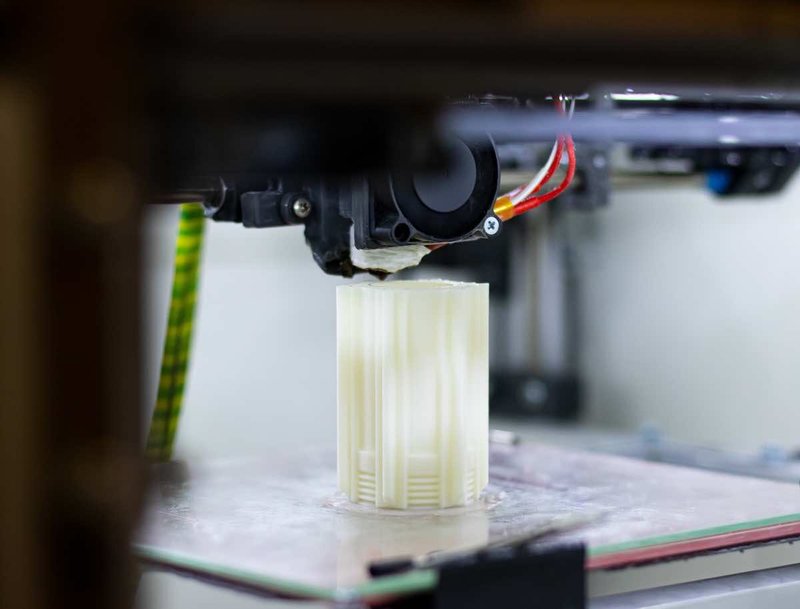
Proven applications
Proven in material science tests, EVOQ integrations have reduced layering issues and boosted tensile strength in 3D-printed prototypes by significant margins, making it suitable for demanding industrial and medical applications. For example, enhanced filaments have shown greater resilience in stress and impact tests, supporting reliable outputs in sectors like aerospace for lightweight components and automotive for custom parts. Laboratory validations confirm no cytotoxicity, positioning EVOQ for biomedical prints like prosthetics or surgical models where hygiene is critical. These applications demonstrate real-world reliability, with early adoptions highlighting cost efficiencies through fewer failed prints and extended material lifespan.
Exploring hypotheses
Hypotheses push 3D printing frontiers further with versatility. EVOQ could enable lightweight yet robust aerospace components, hypothesizing accelerated build times for complex geometries like turbine blades with integrated cooling channels. In biomedicine, metamaterials might create biocompatible scaffolds for tissue engineering, with antimicrobial coatings to prevent contamination during regeneration processes. Consumer goods hypothesize durable, custom prints like tools or wearables with self-cleaning surfaces that resist dirt and bacteria for everyday use. Architectural models could gain enhanced detail and weather resistance for outdoor prototypes, while electronics printing hypothesizes conductive enhancements for integrated circuits or flexible sensors in one-step fabrication. Further ideas include multi-material hybrids for automotive interiors with vibration-dampening properties or medical devices with embedded sensors for real-time monitoring. The EVOQ platform technology's ability to synthesize from any solid metal invites tailored solutions, such as UV-resistant outdoor gear or high-strength industrial tools, unlocking hybrid innovations that were previously impossible.
Benefits and sustainability
Benefits abound: stronger, more efficient prints that cut material waste, energy consumption, and production time, leading to substantial cost savings. The eco-friendly process from EVOQ, scalable and using natural elements without capping agents, promotes sustainable manufacturing, aligning with green standards like ISO 14001 and reducing the carbon footprint of additive technologies through longer-lasting materials and fewer reprints. This resilience supports a circular economy, where printed products endure longer, minimizing environmental impact across sectors.
Collaborate. Request materials today.
Power your 3D printing research with EVOQ. If our metamaterials spark ideas for integrations or hypotheses in your lab, prototypes, or projects. Whether enhancing resins for medical devices or filaments for aerospace, request materials now to test and apply. Wonder no more about novel applications; ask an expert for guidance. Let's broaden our impact together. For samples or expert advice on custom syntheses contact us. Join the future today and engineer transformative additive solutions.
Request materials